Treatments
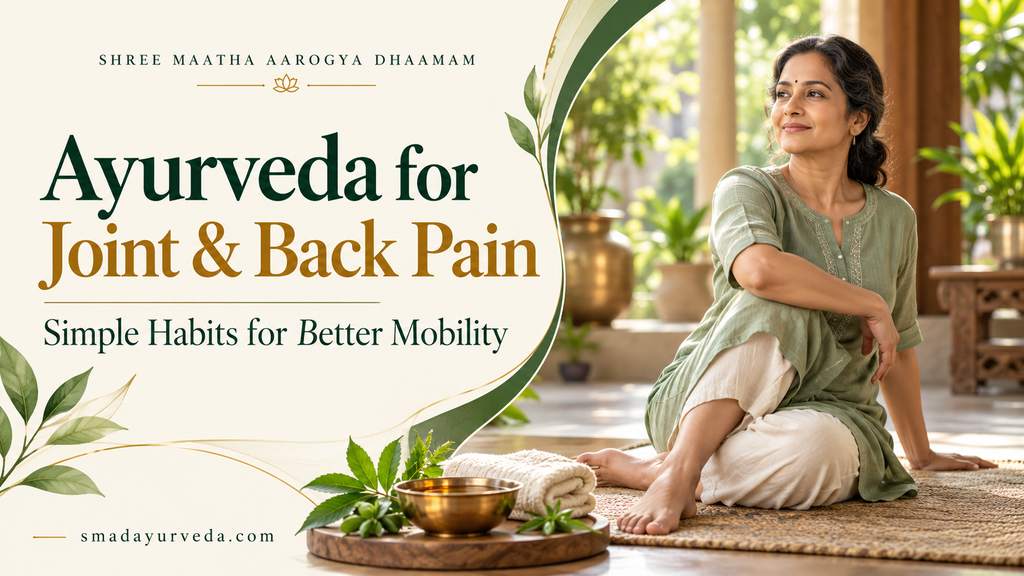
Ayurveda for Joint & Back Pain: Simple Habits for Better Mobility
Discover simple Ayurvedic habits that may help ease everyday joint and back stiffness and support better mobility. Explore gentle movement, warm oil massage, nourishing foods, and mindful posture, along with when to seek professional care at Shree Maatha Aarogya Dhaamam.
Whether it is a dull ache in the lumbar spine after hours at a desk, stiff knees upon waking, or sudden twinges when bending over, joint and back discomfort has quietly become one of modern life's most common complaints.
While conventional approaches often rely on temporary fixes—such as non-steroidal anti-inflammatory drugs (NSAIDs) or topical muscle rubs that mask pain—they rarely resolve the underlying degeneration or postural stress causing it.
Classical Ayurveda approaches musculoskeletal health from the root. Rather than treating pain simply as a localized nuisance, Ayurveda views it as a systemic signal of tissue depletion, metabolic toxicity, and bio-energetic imbalance. By integrating simple, targeted daily habits, you can restore synovial lubrication, strengthen supporting tissues, and regain fluid, effortless mobility.
The Ayurvedic Perspective: Understanding the Pain Mechanism
In classical Ayurvedic texts (Sushruta Samhita and Charaka Samhita), joint and spinal health is primarily governed by the relationship between three factors:
1. Vata Dosha (Asthi-Sandhi Marma)
Ayurveda establishes a direct aphorism: "No pain exists without Vata" (Na hi vatad rite ruja).
- Vata governs movement, space, and the nervous system.
- As we age, undergo excessive physical stress, or experience seasonal dry/cold weather, Vata increases.
- High Vata depletes Shleshaka Kapha—the natural protective lubricant and synovial fluid cushioning cartilage within joints and intervertebral discs.
- When this lubrication dries up, friction occurs, leading to degenerative conditions like osteoarthritis, spondylosis, and disc herniation.
2. Ama (Metabolic Endotoxins)
When your digestive fire (Agni) is weak, undigested food ferments and produces Ama—a cold, sticky toxic residue. When Ama circulates and lodges within already vulnerable joints, it triggers systemic inflammation, morning stiffness, and heat. This state is known classically as Amavata (similar to rheumatoid arthritis).
3. Asthi & Majja Dhatus (Bone & Marrow Tissues)
Chronic spinal strain and joint degeneration reflect deep depletion (Kshaya) in the bone and marrow tissue layers. To rebuild structural integrity, we must nourish these deeper tissues from within.
7 Daily Ayurvedic Habits for Joint & Spinal Mobility
1. Warm Up Stiff Joints with Targeted Herbal Oils
Dryness is the root driver of stiffness. Applying targeted, warm herbalized oils penetrates transdermally to soothe inflamed nerves and lubricate joint capsules.
- Best Formulations:
- Mahanarayana Taila: Rich in rejuvenating herbs that soothe deep sciatic and lower back tension.
- Kottamchukkadi Taila: Specially indicated for swelling, heaviness, and numbness.
- Murivenna: Renowned for rapid recovery from ligament strains and soft tissue injuries.
- The Technique: Warm the oil, massage it gently into the lower back and joints using circular motions, and follow with warm fomentation (a hot water bottle or warm damp towel) to open channels and drive the oil deep into tissues.
2. Re-Ignite Your Digestive Fire to Burn Joint Toxins
If your joints feel worse first thing in the morning accompanied by stiffness, a coated tongue, and general lethargy, Ama is likely present.
- Sip Warm Dry Ginger & Cumin Water: Boil ½ teaspoon of dry ginger powder (Sunthi) and ½ teaspoon cumin seeds in 1 liter of water. Dry ginger is classical Amavataghna (anti-Ama) and acts as a natural COX-2 inhibitor without irritating the stomach lining.
- Avoid Ama-producing foods: Strictly limit cold leftovers, heavy fermented batters, deep-fried snacks, and curd at night, which create metabolic congestion in the joints.
3. Incorporate Bone-Nourishing Foods (Asthi Poshana)
To combat structural degeneration, your diet must deliver natural bio-available minerals and healthy fats (Sneha):
- Sesame Seeds (Til): Black sesame seeds are among the richest plant sources of calcium, magnesium, and healthy lipids in Ayurveda. Chew 1 teaspoon of lightly roasted white or black sesame seeds every morning, or blend them into warm morning porridge.
- A2 Cow’s Ghee: Ghee acts as an internal lubricant (Anupana) that carries fat-soluble minerals deep into connective tissues and protects intervertebral discs from desiccation.
- Warm Bone Broths or Stewed Mung Soups: For non-vegetarians, light bone broths (Mamsa Rasa) provide collagen and gelatin; for vegetarians, well-cooked green mung soup simmered with turmeric, ginger, and garlic delivers light, tissue-building protein.
4. Practice Decompression Yoga & Postural Awareness
Sedentary desk work locks the hip flexors and places sustained pressure on the L4-L5 and L5-S1 lumbar discs. Introduce micro-breaks every 45 minutes to practice simple mobility postures:
| Asana / Movement | Focus Area | Mechanism |
| Marjaryasana-Bitilasana (Cat-Cow) | Entire spine | Mobilizes intervertebral joints and restores spinal spinal fluid flow. |
| Bhujangasana (Gentle Cobra) | Lumbar spine & glutes | Strengthens spinal extensors and counteracts forward computer slouching. |
| Setu Bandhasana (Bridge Pose) | Sacrum & hip stability | Activates stabilizing pelvic floor muscles and relieves sciatic nerve compression. |
| Pawanmuktasana (Wind-Relieving Pose) | Sacroiliac & hips | Releases trapped abdominal Vata that radiates pressure into the lower back. |
5. Hydrate with Warm Fluids, Not Cold
Drinking chilled or iced water constricts local capillary networks, dampens digestive metabolism, and aggravates dry Vata throughout the musculoskeletal system. Always choose room-temperature or pleasantly warm water to ensure continuous cellular hydration and proper waste elimination.
6. Lean on Classical Ayurvedic Herbal Allies
When dietary habits need added support, specific classical herbs offer targeted relief for joints and cartilage:
- Shallaki (Boswellia serrata): Contains boswellic acids that protect cartilage from degradation and reduce inflammatory cytokines.
- Guggulu (Commiphora mukul): Formulations like Yogaraja Guggulu and Kaishore Guggulu act as potent bio-cleansers, scraping Ama out of synovial cavities and relieving deep aches.
- Ashwagandha: Strengthens muscular support along the spine, restores physical endurance, and calms nerve hypersensitivity.
(Always seek the advice of a qualified Ayurvedic doctor for tailored dosing and specific formulations).
7. Avoid Suppressing Natural Urges (Vega Dharana)
One of the most overlooked causes of lower back pain in Ayurveda is the suppression of natural physiological urges—specifically holding back urine, bowel movements, or intestinal gas (Apana Vata). When downward-moving Vata is forcibly retained, it reverses upward, creating intense retrograde pressure that triggers acute lumbar and pelvic stiffness.
When Home Remedies Aren’t Enough: Clinical Ayurvedic Therapies
While everyday habits manage minor stiffness, chronic disc degeneration, sciatica, cervical spondylosis, or severe arthritis require specialized clinical interventions:
- Kati Basti: A classical warm oil pooling therapy where a reservoir made of black gram dough is sealed over the lumbosacral spine. Warm medicated oil is poured and held at a constant temperature, deeply hydrating dehydrated discs and relieving compressed spinal nerves.
- Janu Basti: Specialized oil pooling therapy administered directly over the knee joints to restore synovial fluid, relieve friction, and postpone surgical intervention.
- Greeva Basti: Targeted therapeutic pooling for cervical spondylosis, neck spasms, and computer-neck syndrome.
- Patra Pinda Sweda (PPS) / CPS Therapy: Medicated herbal bolus massages that induce deep sweating to break down inflammation, drain stagnant fluid, and relieve chronic muscle contractures.
- Vasti Therapy: Known as the mother of all Panchakarma treatments for Vata disorders; medicated enemas eliminate accumulated systemic Vata from its primary home—the colon—producing profound relief throughout the entire skeletal system.
Reclaim Fluid, Pain-Free Movement
Pain is not an inevitable consequence of aging or hard work; it is an invitation to listen to your body and restore what has been depleted. By warming your tissues, clearing metabolic waste, and moving with mindfulness, you lay the foundation for flexible, pain-free mobility for years to come.
Overcome Joint & Spine Pain at Shree Maatha Aarogya Dhaamam (SMAD)
If chronic backache, neck pain, or creaking joints are restricting your daily life, a specialized Ayurvedic assessment can identify the exact stage of degeneration and root imbalance.
AtShree Maatha Aarogya Dhaamam, our qualified physicians provide specialized orthopedic and spine care (Prishta Vamsha):
- Nadi Pariksha (Pulse Diagnosis): In-depth assessment to distinguish between Vata-dominant degeneration and Ama-dominant inflammation.
- Classical Basti Therapies: In-clinic Kati Basti, Janu Basti, and Greeva Basti protocols using authentic, medicated herbal formulations.
- Integrative Rehabilitation: Combining classical Panchakarma with Marma Chikitsa, Meru Chikitsa (spinal adjustment), and personalized Yoga therapy for lasting recovery.
Take the first step toward lasting spinal and joint health. Visit our centers in Hyderabad (Gachibowli & Secunderabad), or book your consultation today atsmadayurveda.com.